
The Ethics of the Light
Station ElevenThe novel contrasts the sustaining power of community with the danger of beliefs that divide survivors into the worthy and the condemned.
increasing Bearing strength in each event
 decreasing
Bearing strength in each eventdecreasingA Universal Need for Meaning
A Universal Need for Meaning
Survivors ask why
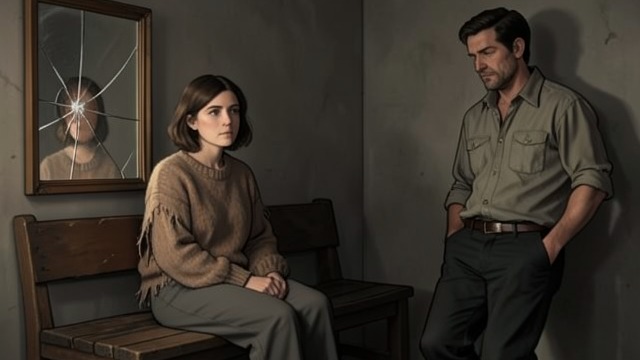
People who live through the Georgia Flu confront a catastrophe that has no satisfying explanation. Some seek comfort in luck, memory, religion, or the possibility of rescue.
Meaning can shelter
Elizabeth believes events happen for a reason, while Clark resists that certainty. Their disagreement begins as a difference in coping, not yet as a conflict between communities.
A Theology of Selection
A Theology of Selection
Survivors called pure
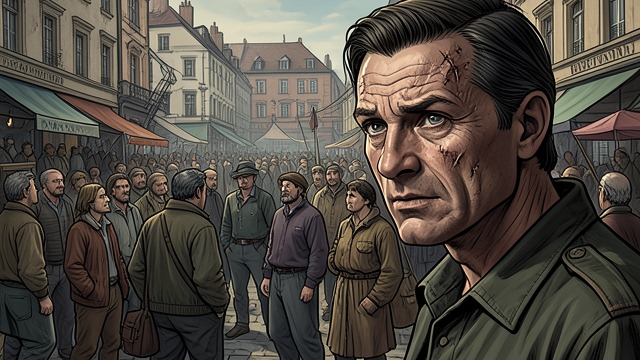
The Prophet describes the pandemic as a divine cleansing and his followers as the light. Survival becomes evidence, in his account, of moral superiority.
A dangerous division
If one group represents purity, outsiders can be treated as threats rather than neighbors. The sermon turns grief into a hierarchy that can justify future violence.
The Threat beneath the Sermon

The Threat beneath the Sermon
A request for Alexandra
The Prophet asks the Conductor to leave Alexandra behind as a bride. Spiritual language gives cover to a plainly coercive demand.
Refusal reveals the stakes
The Conductor rejects him and prepares the troupe to flee. The confrontation shows that doctrine is not merely an idea; it governs bodies, movement, and safety.
A Follower’s Doubt
A Follower’s Doubt
A trained boy hesitates
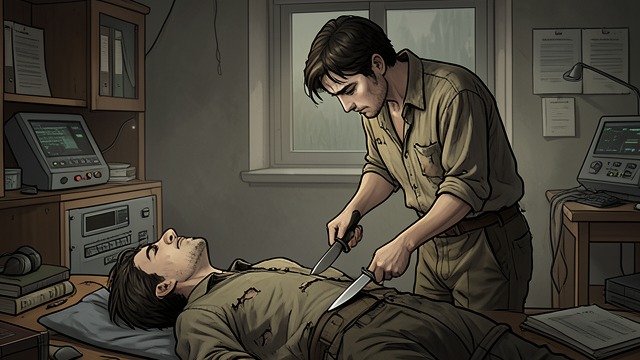
The young sentry who once watched the road cannot look Kirsten in the eye when he takes her knives. He has been trained in violence but is visibly troubled by what his group does.
A belief breaks
At the final confrontation, he kills the Prophet and then himself. His action ends the leader’s control but reveals how thoroughly the doctrine has damaged the people it claimed to save.
A Different Kind of Community
A Different Kind of Community
Shared work instead of purity
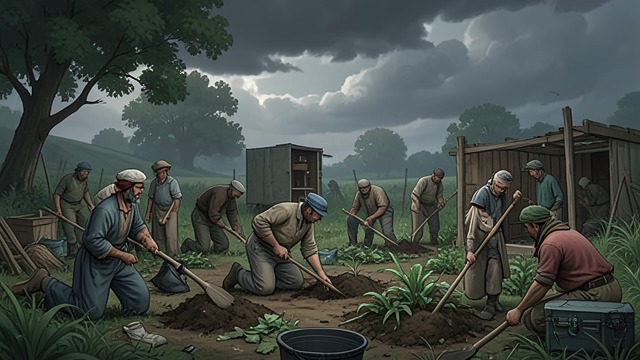
The airport survives through hunting, teaching, repair, gardening, and care for people who arrive. Its routines do not require a doctrine that labels others impure.
Survival remains insufficient
The Travelling Symphony brings performance into the settlement, and a distant electric town opens the future outward. Community becomes a practice of mutual responsibility rather than proof of divine selection.
The first years after the pandemic
During the Prophet’s sermon at St. Deborah
After the performance at St. Deborah
During the Prophet’s pursuit near the airport
At the airport settlement, near the ending
